
Skip to content
Email Us : info@hsppharma@gmail.com |
Menu

Novel Drug Delivery System Research

Engineering Advanced Drug-Delivery Systems for Improved Therapeutic Performance

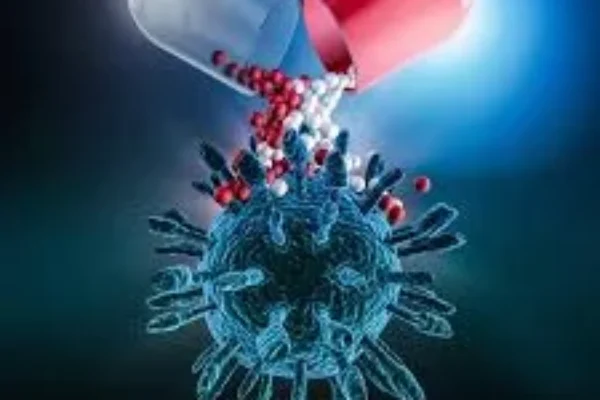
At HSP Research Group LLP, we undertake research and development in Novel Drug Delivery Systems (NDDS) aimed at addressing limitations associated with conventional dosage forms and improving drug solubility, stability, bioavailability, therapeutic targeting, drug-release characteristics, and patient convenience.

Our research integrates pharmaceutics, nanotechnology, biomaterials, formulation science, biopharmaceutics, and analytical characterization to design and optimize advanced drug-delivery systems for pharmaceutical and selected bioactive compounds.

Our capabilities encompass nanoparticles, liposomes, nanoemulsions, nanogels, vesicular systems, controlled-release platforms, and targeted/site-specific delivery approaches.
images-3-1
Why Novel Drug Delivery Systems?

Novel drug-delivery technologies can help address poor solubility, low bioavailability, instability, rapid drug elimination and frequent dosing requirements. Development Approach: API Challenge → Delivery Strategy → Formulation Design → Characterization → Optimization → Performance Evaluation

Our Novel Drug Delivery Expertise

  • Nanoparticle-Based Drug Delivery Polymeric, lipid-based, biodegradable and surface-modified nanoparticles for controlled or localized delivery. Key parameters include particle size, PDI, zeta potential, drug loading, release and stability.
  • Liposomal Drug Delivery Phospholipid-based carriers explored for suitable active ingredients, focusing on vesicle size, encapsulation, drug release and formulation stability.
  • Nanoemulsion Development Nanoemulsion systems for selected poorly soluble APIs, with emphasis on component selection, droplet size, solubilization, characterization and stability.
  • Nanogel Drug Delivery Polymer-based nanogels investigated for localized delivery, focusing on particle size, drug loading, swelling behavior, release and stability.
  • Vesicular Drug Delivery Systems Research may include liposomes, niosomes, transfersomes, ethosomes, transethosomes and phytosomes to explore drug penetration, retention and release.
  • Controlled & Sustained Drug Delivery Matrix, reservoir, polymeric and multiparticulate systems designed to investigate prolonged release, dosing convenience and consistent drug exposure.
  • Targeted & Site-Specific Delivery Formulation strategies for localized, gastrointestinal, colon, mucosal, pulmonary and ocular delivery, depending on the API and intended application.
  • Phytosomes & Phospholipid-Based Delivery Phospholipid complexes explored for selected botanical extracts and phytoconstituents to investigate solubility, dissolution and delivery performance.
  • Delivery Systems for Poorly Soluble APIs Potential approaches include nanocrystals, nanosuspensions, nanoemulsions, lipid-based systems, nanoparticles, liposomes, solid dispersions and complexation.
  • Stimuli-Responsive Drug Delivery Systems designed to investigate release responses to pH, temperature, enzymes, redox conditions and other relevant stimuli.

Formulation & Process Optimization

QbD and DoE approaches may be used, where appropriate, to study formulation and process variables, optimize critical quality attributes and improve reproducibility. Key variables include polymer/lipid concentration, surfactant levels, drug-to-carrier ratio, mixing, homogenization, sonication and processing conditions.

Characterization of Novel Drug Delivery Systems

Depending on the formulation, evaluation may include particle or vesicle size, PDI, zeta potential, morphology, drug content, loading, encapsulation efficiency, in-vitro release and physical and chemical stability.

From Formulation Design to Delivery Performance

HSP Research Group LLP aims to explore API-specific delivery strategies through formulation development, systematic optimization and appropriate characterization, subject to project scope and available capabilities. Discuss Your Novel Drug Delivery Project Connect with HSP Research Group LLP to discuss formulation challenges and potential advanced drug-delivery approaches.

Particle SizeDetermines size distribution and formulation consistency
PDIEvaluates particle-size distribution
Zeta PotentialProvides information on surface charge and dispersion behavior
MorphologyEvaluates particle/vesicle structure
Drug LoadingDetermines amount of drug associated with carrier
Encapsulation EfficiencyDetermines proportion of drug incorporated
AssayDetermines drug content
PHEvaluates formulation suitability/stability
ViscosityImportant for applicable liquid/semisolid systems

Drug ReleaseDetermines release behavior
DissolutionAssesses dissolution improvement where applicable
Thermal PropertiesEvaluates material and drug interactions
Solid-State PropertiesInvestigates crystallinity/polymorphic changes
Chemical StabilityEvaluates degradation
Physical StabilityMonitors aggregation, phase separation or other changes

In-Vitro Drug Release & Performance Evaluation

Studies may include drug release, dissolution, release kinetics, permeation, diffusion, retention, deposition and comparative formulation evaluation. Mathematical models such as Zero-order, First-order, Higuchi and Korsmeyer–Peppas may be used where appropriate.

Advanced Drug Delivery Across Multiple Routes

  • Oral: Nanoparticles, nanoemulsions and controlled-release systems.

  • Topical & Transdermal: Nanogels, liposomes, transfersomes and ethosomes.

  • Ophthalmic: Nanoparticles, liposomes and in-situ delivery systems.

  • Pulmonary & Nasal: Nanoformulations, engineered particles and mucoadhesive systems.

  • Other Routes: Strategies selected according to API characteristics and intended application.

From Conventional Formulation to Advanced Delivery

API Characterization → Preformulation → Delivery Strategy → Prototype Development → QbD/DoE Optimization → Characterization → Performance Evaluation → Stability → Scale-Up → Technology Transfer.

Challenges We Address

Poor Solubility | Low Dissolution | Limited Bioavailability | Drug Instability | Rapid Release | Short Residence Time | Permeation Limitations | Controlled & Site-Specific Delivery | Formulation Robustness.

Research-to-Product Development

Our approach considers reproducibility, stability, scalability, manufacturability, analytical evaluation and relevant regulatory requirements throughout formulation development.

Development Pathway:
Research Concept → Formulation Development → Optimization → Characterization → Stability → Scale-Up → Technology Transfer.

Why Choose HSP Research Group for NDDS Research?

  • Multidisciplinary Approach: Pharmaceutics, drug delivery and analytical sciences.

  • API-Specific Selection: Delivery strategies guided by molecule characteristics.

  • Systematic Optimization: QbD/DoE approaches where appropriate.

  • Performance-Focused Research: Release, stability and formulation robustness.

  • Product Development Perspective: Consideration of scalability and reproducibility.

From Molecule to Advanced Delivery System

Research interests include nanoparticles, liposomes, nanoemulsions, nanogels, niosomes, transfersomes, ethosomes, phytosomes, controlled-release, targeted and stimuli-responsive delivery systems.

Discuss Your NDDS Project
Connect with HSP Research Group LLP to explore formulation challenges and potential advanced drug-delivery strategies.